Search “sell USDT for cash Dubai” and the first page is full of offices in Business Bay towers promising dirhams, dollars or euros in an hour, often with a line like “passport only, tourists welcome”. For someone holding crypto and needing physical cash — for rent, a car deposit, or because they simply trust notes more than apps — that pitch is tempting.
This guide explains what those offices are in regulatory terms, which names Dubai’s regulator has warned the public about, and the slower but licensed route that ends with AED notes in your hand at your own bank. It also covers the opposite direction: turning cash into crypto without handing a stranger a bag of money. We do not list or recommend unlicensed cash shops.
What “crypto to cash” really means in Dubai
There are three different things people mean by cashing out, and they carry very different risks.
The first is selling crypto for dirhams in your bank account. That is the standard on a licensed exchange and is covered step by step in our guide to withdrawing crypto to a UAE bank. The second is peer-to-peer: you sell USDT to another person on an exchange’s marketplace and they pay you by bank transfer. The third — the subject of this page — is physical cash: someone hands you banknotes in exchange for crypto sent from your wallet, or takes your notes and sends you coins.
Physical cash is the only one of the three that has no licensed version in Dubai that we could find. That is not because cash is illegal; it is because every licensed path runs through a bank account in your name, which gives the platform the identity and money trail the law requires.
Business Bay, Downtown and Deira cash offices: who they are
The cash-for-crypto offices that rank in search tend to sit in Business Bay towers, with others advertising Downtown, Deira or “we come to you” delivery. Their marketing is usually press releases on paid newswires rather than coverage by Dubai media, and the claims are strikingly similar: same-day cash in AED, USD or EUR, competitive rates on USDT, and minimal ID.
Three examples from that marketing: SUID (“Sell USDT in Dubai”) describes an office in Business Bay paying AED, USD or EUR and says only an ID or passport is needed, even for tourists. SBID (“Sell Bitcoin in Dubai”) describes an office at a Business Bay tower. PallaPay has described cash buying and selling at Dubai branches in several currencies. When we searched the VARA public register at the time of checking, none of these names appeared as a licensed virtual-asset service provider.
That matters because VARA’s licence is not optional: any virtual-asset service carried on in or from Dubai (outside the DIFC) needs one. An office that is not on the register is not supervised by VARA, has no regulator-approved complaints process, and has no obligation to segregate your money.
Does VARA ban cash crypto deals?
This is where many articles overreach, so precision helps. We did not find a VARA rule that expressly says “licensed firms may not accept banknotes” or “cash crypto trades are banned”. Anyone claiming a specific cash ban should be able to cite it, and we could not.
What the rules do say points the same way in practice. VARA’s Compliance and Risk Management Rulebook requires licensees to place client money in a client account at a third-party bank in the UAE within one calendar day of receiving it. The AML regime requires full customer due diligence and source-of-funds checks before a firm deals with you. A walk-in desk handing out notes against a passport photo cannot meet those standards, which is why every licensed platform in Dubai works through bank transfers rather than cash counters.
The federal anti-money laundering law tightened this further. Federal Decree-Law No. 10 of 2025, in force since October 2025, replaced the 2018 AML law, explicitly covers virtual-asset service providers and offences committed through virtual assets, and allows money-laundering charges to rest on circumstantial evidence. The risk is not only the operator’s: if the cash you receive, or the crypto you are sent, turns out to be the proceeds of crime, your bank account and wallets can be frozen while investigators work out who knew what. In 2026, Dubai and Sharjah police questioned Binance staff over complaints about third-party payments into a client-money account — a reminder that money flows in the UAE are traced. For the wider legal map, see our UAE crypto regulation guide.
Related guide Withdraw crypto to a UAE bankThe licensed route from crypto to cash in your hand
The route below takes a day or two instead of an hour, but every step is with a regulated firm, in your own name, with a paper trail you can show a bank or a court.
- Step
Sell on a VARA-licensed exchange
Use an exchange that appears on the VARA register with an AED bank rail, such as Binance FZE, OKX Middle East or Crypto.com (Foris DAX Middle East). Send your coins to your account there and sell them for AED on a USDT/AED or BTC/AED pair. For USDT, check the price against the 3.6725 peg before you sell.
- Step
Withdraw AED to your own UAE bank account
Withdraw to an account in exactly the same name as your exchange profile. Binance’s AED rail through ADCB charges a flat AED 10 per withdrawal (AED 11 minimum) and usually pays within one to two business days; OKX charges nothing but takes up to three. Name mismatches are the most common reason a withdrawal bounces.
- Step
Tell your bank before large amounts arrive
If the amount is larger than your usual inflows, message your relationship manager or the bank’s support first, explaining that you are receiving proceeds from selling crypto on a VARA-licensed platform. Keep the exchange statement ready; it answers most compliance questions in one document.
- Step
Withdraw cash at your bank
Take the cash from an ATM up to your card’s daily limit, or ask the branch for a larger counter withdrawal. Branches may need notice for large sums. You end up with the same banknotes a cash office would have handed you, but with no counterparty risk and a clean record.
The reverse direction works the same way. To buy crypto with cash, deposit the notes into your own bank account, then send AED by bank transfer to a licensed exchange; Binance and Crypto.com both accept AED bank deposits from AED 10 without a deposit fee. Our bank transfer guide covers that leg.
USDT for cash: the rate versus the 3.6725 peg
The dirham has been pegged to the US dollar at 3.6725 for decades. USDT is designed to track the dollar, so a fair USDT/AED price sits close to AED 3.67. Any gap between that number and the rate you are offered is the dealer’s margin.
On licensed P2P markets the gap is small. A recent third-party snapshot of Binance P2P showed the best USDT ask at about AED 3.681 (around 0.23% over the peg) for orders of AED 25,000 or more, with smaller buyers paying about AED 3.69–3.70. Cash offices quote their own rates, usually below the peg when they buy from you.
A worked example shows why a few fils matter. Selling 10,000 USDT at the peg is worth AED 36,725. At a cash rate of AED 3.62 you would receive AED 36,200 — about AED 525 less, a 1.4% cost before any risk of fake notes or a no-show. Selling the same USDT on a licensed exchange near the peg and paying the AED 10 bank withdrawal fee leaves you much closer to AED 36,700. Use the calculator next to the quick answer above to try your own amount.
Be equally suspicious of rates that are too good. An office offering to buy your USDT at AED 3.70 or more in cash is pricing above the market, which usually means it plans to pay with money it cannot use itself or never plans to pay at all.
How to vet a crypto exchange office in Dubai
If you are still considering a walk-in office, run these checks before you go. Each one takes minutes, and any single failure is enough to walk away.
- Register check: search the legal company name on the VARA register. Not listed means not licensed to deal with you in Dubai. A DMCC or mainland trade licence for “general trading” is not a VARA licence.
- Warning check: search the name and website on VARA’s regulatory notices page. BTC Bay, Coincashy and Koto Crypto were all named there.
- KYC check: a firm that says “passport only” or “no questions” is telling you it does not meet UAE AML standards. A licensed firm asks for Emirates ID or passport, address and source of funds.
- Payment check: a licensed firm pays to a bank account in your name. A request to bring or collect cash, or to pay a third party, is a red flag.
- Marketing check: VARA’s marketing rules require a risk disclaimer on crypto promotions. Glossy paid press releases with no licence number are a pattern, not a credential.
If you meet a buyer or seller in person anyway
We do not recommend face-to-face cash trades. If you are in a situation where it happens — selling to someone you know, for example — these precautions reduce the obvious risks:
- Meet in a bank branch during business hours, so the cash can be counted and deposited on the spot rather than carried.
- Never send crypto first. Release coins only after cash is counted and, ideally, deposited into your own account.
- Do not accept a screenshot of a bank transfer as payment; wait until the money shows as cleared in your own banking app.
- Bring someone with you and tell another person where you are.
- Send a small test amount to confirm the wallet address and network before the main transfer.
- Keep the chat history, the counterparty’s ID and the transaction hashes. If anything goes wrong, these are what you give Dubai Police.
The bigger risk is not robbery but tainted money. Cash or crypto that came from fraud can lead to your own accounts being frozen even if you acted in good faith. That is the strongest argument for the bank route. Our crypto scams guide lists the patterns most often reported in the UAE.
What about crypto ATMs?
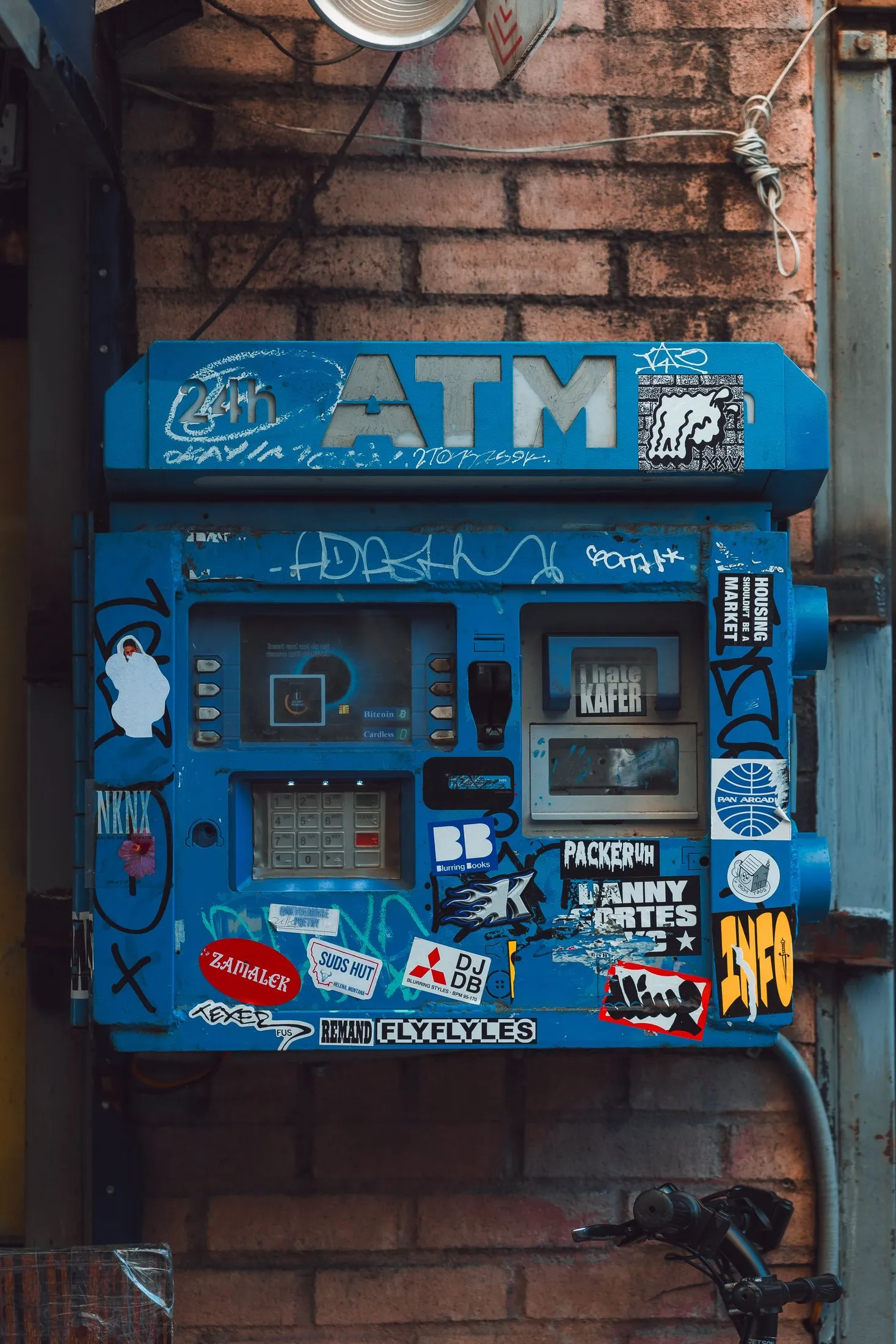
People often ask where the bitcoin ATM in Dubai Mall is. We could not find any source confirming one. The only documented crypto ATM in the UAE was a buy-only machine at a hotel in JBR in 2019, which Dubai Police shut down within about two days over AML concerns, and VARA’s licence categories do not include an ATM activity. Our crypto ATM Dubai page keeps track of the status.
Which route fits your situation
If you want cash today and hold a small amount, the honest answer is that the fastest licensed route still takes until the next business day. Selling on a licensed exchange in the morning on a weekday can mean AED in your account the same day: BitOasis, for example, processes AED withdrawals requested before 11:00, Monday to Saturday, on the same day. If you hold a large amount — say, more than AED 500,000 — talk to a licensed crypto OTC desk in Dubai, which will settle AED to your bank and help with the source-of-funds paperwork. If you are a tourist without a UAE bank account, sell on a licensed exchange that serves your home country and withdraw to your home bank; ATMs in Dubai accept most international cards.
Whatever route you choose, crypto prices move fast and a delay of a day can change what you receive. Keep records of every sale; even though individuals in the UAE pay no personal income tax on crypto gains, your bank, future landlord or home country’s tax authority may ask.